Artificial intelligence (AI) has probably handed you back an hour this month. It wrote the awkward email to a client, boiled a contract down to one page, or turned your rough notes into a proposal.
The people who want into your network got the same hour. They are not spending it on email.
The clock that changed
A flaw in a piece of software used to buy a business time. Somebody skilled had to find it, then spend weeks building an attack that worked. A fix usually came out and got installed somewhere in between.
AI tools now do a large part of both jobs. A flaw that is announced on Monday can be a working attack by Wednesday. Within hours of the announcement, automated scanners sweep the internet for anything still running the old version, and they do not care whether the address belongs to a bank or to a six-person office in Bangor.
So the real question is no longer whether your software has flaws. It all does. The question is how long a known flaw stays open on a device that faces the internet.
The devices nobody thinks to update
Most owners picture updates as the little prompt on a laptop. Those matter, and plenty of them sit waiting for a restart nobody does.
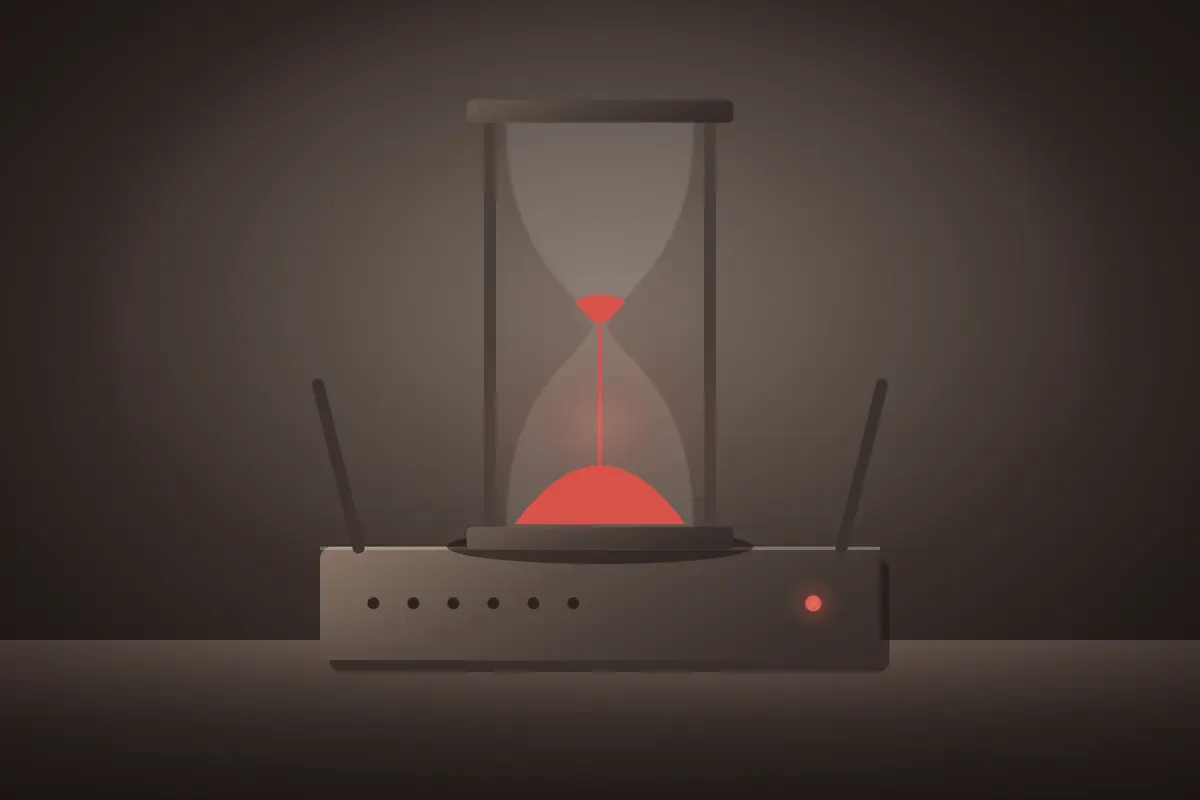
The bigger exposure is somewhere else. The firewall, the router and the remote-access tool your team uses from home sit directly on the internet, and many of them never update on their own. Nobody sees a prompt. Nobody gets reminded. These are the first places an automated scan knocks, because they are the front door.
That produces an odd result. A business can have every laptop current and still have the box that guards the whole network running software that is months behind. It looks fine from the inside right up until the day it is used against you.
A monthly maintenance routine does not close this either. A month of exposure against an attack that arrives in two days is a month of open door.
What keeping pace actually takes
Closing that window is not one task. It is several, done every day:
- Reading security announcements as they are published, not when somebody gets to them.
- Knowing every device and program the business runs, including the ones under a desk or in a closet.
- Deciding which fixes cannot wait until tonight and which can wait until the weekend.
- Testing a fix before it goes in, because a rushed update can stop the accounting software or the printer your team needs this afternoon.
None of that is hard to understand. It is hard to keep doing, every day, alongside running a business. That is why the firewall is usually the oldest thing in the building.
Close the gap before someone measures it for you
Attackers now count in days. Most small business updates still count in months, and the gap sits in the devices nobody looks at. A laptop that is current tells you nothing about the router behind it.
The old way was trusting that updates happened. The new way is knowing, device by device, when each one last changed.
Here is your five-minute check. Ask whoever handles your technology one question: when was the firewall last updated, and who checks it? If the answer is a guess, or a name that has since left, you have found your gap. Write the date down. Then ask the same question about the router and anything your team uses to log in from home.
That gap is the work we do every day. If you want it closed for good, the next step is below.
👉 New to Borked PC? Start by filling out our quick Right Fit Questionnaire to see if Borked PC could be the right IT and Cybersecurity Partner for you.
📞 Or schedule a free 15-minute call at a time that works for you: Book a call
Prefer to talk now? Give us a call at (610) 599-6195.